By Kometani, Kuma
Shonai, Toyonaka, Osaka — Summer days stretch long in the northern suburbs, and the heat comes off the asphalt in visible waves. On a Saturday, I found myself taking a meandering route home from an early morning sauna, a long, contemplative soak in a hinoki tub at Yume no Kōshitsu Yokujō Goshiki, a sprawling traditional bathhouse that sits at the improbable intersection of the Hanshin Expressway and a vacuum-sealant manufacturer.
The bathhouse itself is a time capsule: vintage 1970s tilework, recently renovated with a bubbling fountain and koi swimming under glass floor panels. It has become justifiably popular for its rich, inexpensive, and voluminous curry udon. But I skipped the udon. I wanted to walk.
I wove in and out of back streets, letting my nose lead. And then I caught it: the smell of sweet sauce and grilled chicken. But this was not the round, sugary aroma of yakitori tare laced with sake. This was different, sharper, almost ketchup-like, with a tart tang. The unmistakable scent of okonomiyaki sauce hitting a hot iron. But chicken? At this hour?
I turned the corner.
The Blue Noren: First Clues of a True Osaka Diner
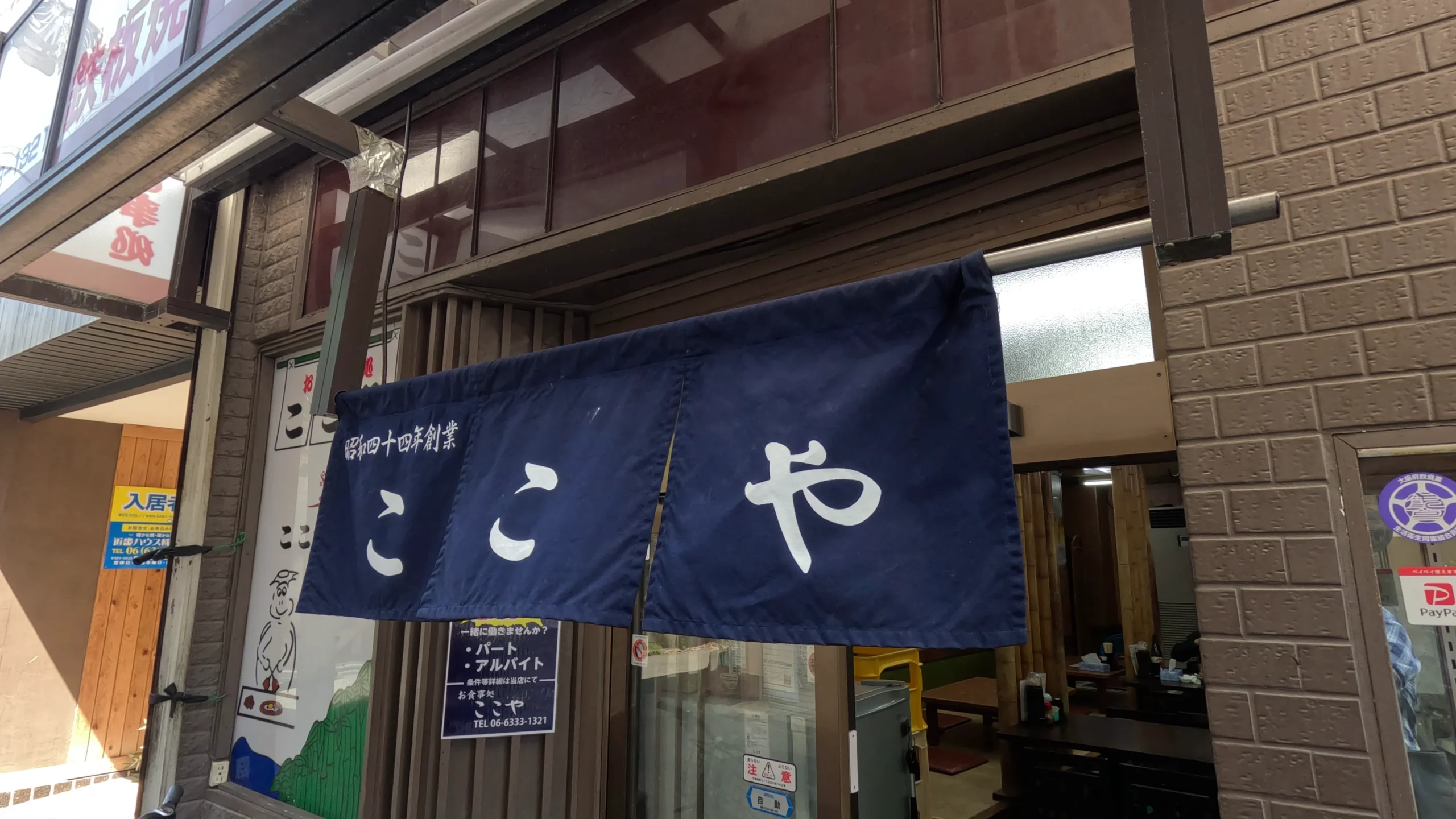
A short line had formed in front of a blue noren curtain. A few men and women in basketball shorts and t-shirts hung out by the door, smoking Seven Stars and continuing their conversation with the commotion inside. It was still morning.
Ah, I thought. This is something worth investigating.
The purpose of life, as I have come to believe it, is the discovery of flavor, passion, aroma, and the rendering of ingredients. And this shokudo had all the hallmarks of a hidden gem:
- An early morning crowd.
- Extremely casual banter.
- A line of people who look like they just got out of bed.
Yes. I had found something special.
Entering the Stage
I circled back twice, surveying both entries. The line had dissipated, which gave me an opening. I pulled the sliding door gently to the left. Full house. In polite Japanese, I asked the elder woman, who seemed to be having lively conversations with every table, “Ima, seki ga aite imasen ka?” (Is there a seat open now?)
The man behind the large, U-shaped teppanyaki grill was a brick house of a human. He looked left, then right, and gave a small frown. Ahhhh, I thought. Maybe no good.
But food takes time. And if my instincts were correct, I had already made an important discovery.
I waited outside for four minutes. Then a pair of happy-looking regulars poked their heads out through the noren on their way out. I was greeted with a big smile, the kind you don’t fake, and asked them what the most popular dish was, noting the wonderful smell.
They recommended the tonpeiyaki, a humble pork chop grilled hot on the flattop, wrapped in a thin egg pancake with mayonnaise, sauces, and scallions. (For the record, my top tonpeiyaki in Osaka still goes to Dontaku in Doyama-chō for its spicy Chinese mustard punch. But I would learn to hold that opinion lightly.)
The regulars said something to the family inside, something that translated roughly to “that weird large man outside is still here,” and invited me in. A seat had opened at the counter, just to the right of the chef.
The Anxiety of the Newcomer
For a small moment, trepidation gripped the staff. They were trying to understand how best to serve me. Is this person literate? It’s a valid question. One awkward customer can spoil the atmosphere of a packed house, and I respect that. Choosing the correct customers, especially in a small, family-run space, is like choosing ingredients. The selection matters.
I ordered a Kirin bottle, a peace offering, and quickly scanned the paper menu. I ordered the first dish that sounded delicious in that instant. This instinct is important to cultivate: one should decide within the space of a single breath upon seeing a menu item. Spontaneous inspiration is a muscle.
I ordered yakiudon.
It is a simple enough dish, impossible to mess up, and would buy me time to watch the chef’s process. More importantly, it would allow me to watch dishes come out of the kitchen. This slight of hand is crucial: order something you can slowly enjoy while studying the kitchen for seasonal ingredients and off-menu treasures.
The Diner
Sitting there, it struck me: this is a diner atmosphere. Like a British café. Like a Northeastern greasy spoon. It is also, unmistakably, a family-run business.
The matron, a woman of unknowable age but with beautiful smile lines carved from decades of banter, worked the room, talking with every table. The cook, a man of about fifty, stood behind the hot iron while staff passed ingredients from the kitchen to the front. The teppan is the stage around which the entire restaurant is organized. Orders are shouted to the cook, then relayed back. Stainless bowls of prepped ingredients come forward in a steady, practiced rhythm.
On the western wall, above a drinks cooler, hung straw sandals from Hattori Tenjin shrine, the local shrine whose history dates to 901 AD, founded on a legend of miraculous healing of the feet. (The author himself once had his foot crushed in an industrial accident and prayed there before having his bones fused back together. But that is another story.)
On the grill, the master was grilling and steaming whole chopped chicken drumsticks and thighs. Whole halves of a bird, throwing seasonings left and right, jetting sauce and liquid, allowing everything to steam and then crisp. The smell was heaven.
From my perch, I could see into the fridge under the counter. Bright, no, incandescent strips of lean wagyu were prepped and waiting. The humble environment belied a secret: care taken towards the selection of ingredients.
The Yakiudon
My yakiudon arrived in about fifteen minutes, which left me genuinely hungry. Another wonderful build of anticipation.
As the dish hit my nostrils, I noticed something immediately: the sauce, often just called “sauce” in Osaka regional restaurants, was more acidic than expected. I am an absolute fiend for suppai (sour) flavors. And this house-made sauce had a strong note of citric acid. Lemon juice. Possibly orange juice. Underneath: sugar, sake, salt, and shoyu. While surely impossible to know, perhaps Otafuku as a base, enhanced with an additional bite, like Worcestershire and lemon. A deep and complicated blend of tart, sweet, spice, and umami.
“Momo, Kore de Owari”
Sometime around noon, on my second beer, the cook mentioned to the kitchen that this was the last chicken. He would not be cooking any more today.
“Momo, kore de owari.”
A testament to their ingredient freshness: they cook the day’s offerings until sold out. No more. No less.
I nursed my beer. Having finished my udon, I gathered the courage to order a second entrée. Do not disrespect the advice, I thought, and ordered the tonpeiyaki.
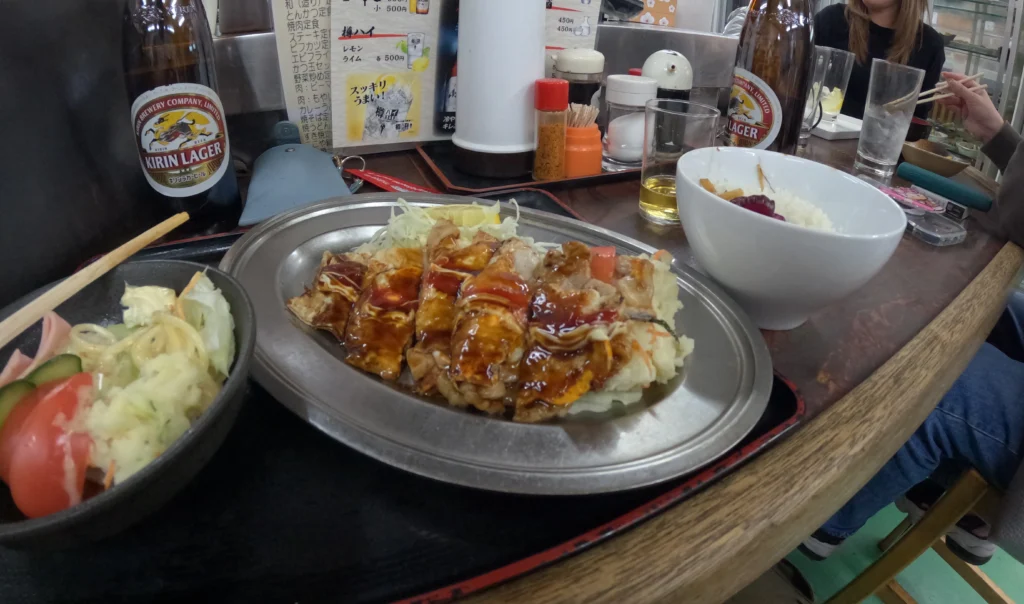
It was very good. A lean cut of pork, cooked until slightly browned and glazed with the same sauce as my udon. Drizzled with scallions, wrapped in a thin egg batter, served with a gentle thin drizzling of mayonnaise. The pork had a clean, honest flavor, no excess fat, just the sweetness of the grill the tang of the sauce, and the roundness of the egg.
The Treasure Fridge
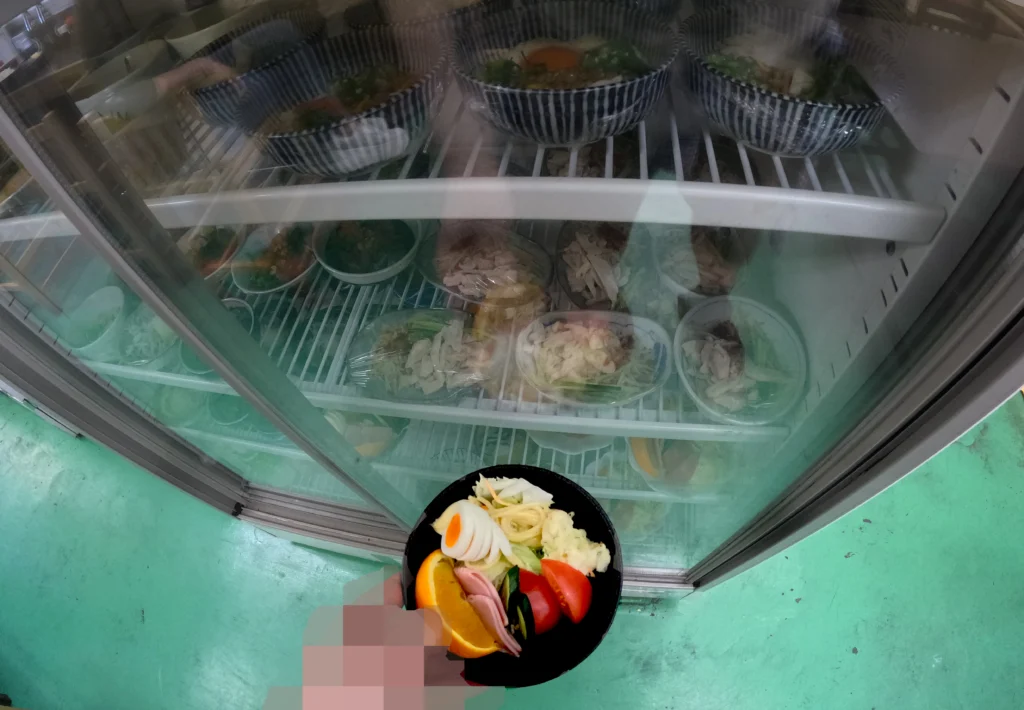
A curious feature of this cafeteria: two sliding glass coolers filled with small plates wrapped in plastic wrap. This kind of self-service can only come from a family kitchen, I thought. Pasta salad. Greens. Potato salad. Fruits. Snacks. You can pull anything from the fridge, so long as you announce your choice to the house staff.
“Salad, ichi sara!” I called out, as I lumbered back to the counter on my shitty foot.
From the kitchen, I saw shrimp and many other delicacies fly out over the counter. Ebi. Katsu. Sukiyaki. Drinks flowed out, feeding a lively atmosphere that never felt rushed, only full.
Last Call
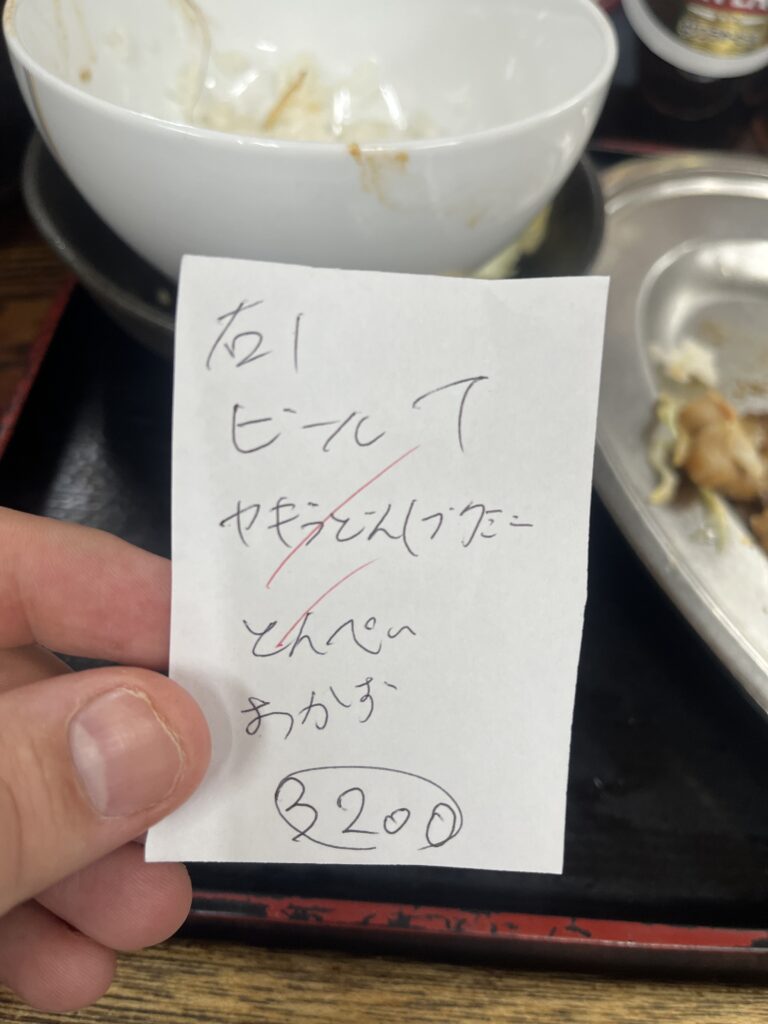
As the morning rush died down, I finished my tonpeiyaki, miso soup, fresh pickles, and rice. I thanked the staff. The matron smiled. The brick-house cook gave a small nod. A part timer came in late with messy hair and apologized for several minuntes for oversleeping though the morning rush- everyone smiled and joked with them. iiyo! The blue noren fluttered as I stepped back into the heat.
Outside, the line had started to form again.
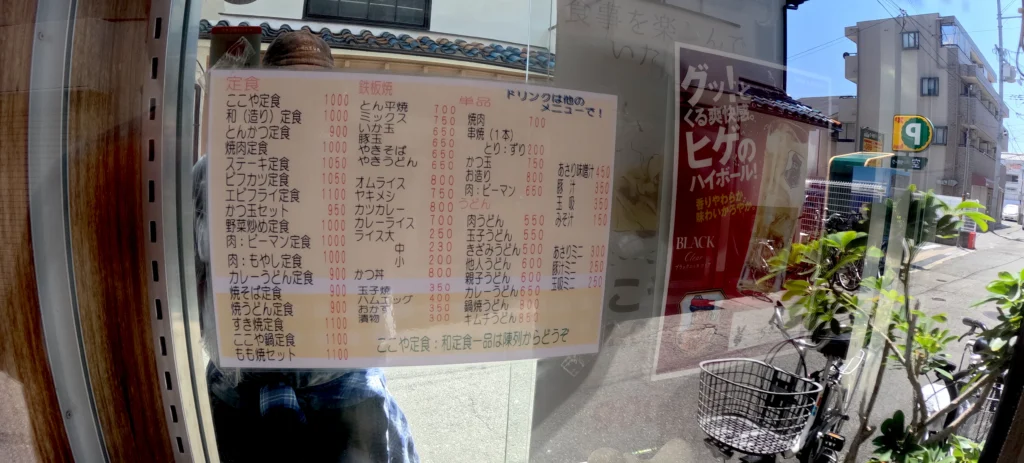
Menu (May, 2026)
定食 (Teishoku / Set Meals)
- ここや定食 (Kokoya Teishoku / Kokoya Set Meal) — ¥1,000
- 和(造り)定食 (Wa (Tsukuri) Teishoku / Japanese Sashimi Set Meal) — ¥1,000
- とんかつ定食 (Tonkatsu Teishoku / Pork Cutlet Set Meal) — ¥900
- 焼肉定食 (Yakiniku Teishoku / Grilled Meat Set Meal) — ¥1,000
- ステーキ定食 (Sutēki Teishoku / Steak Set Meal) — ¥1,050
- ビフカツ定食 (Bifukatsu Teishoku / Beef Cutlet Set Meal) — ¥1,050
- エビフライ定食 (Ebifurai Teishoku / Fried Shrimp Set Meal) — ¥1,100
- かつ玉セット (Katsutama Setto / Pork Cutlet & Egg Set) — ¥950
- 野菜炒め定食 (Yasai Itame Teishoku / Stir-Fried Vegetable Set Meal) — ¥1,000
- 肉:ピーマン定食 (Niku: Pīman Teishoku / Meat & Green Pepper Set Meal) — ¥1,000
- 肉:もやし定食 (Niku: Moyashi Teishoku / Meat & Bean Sprout Set Meal) — ¥1,000
- カレーうどん定食 (Karē Udon Teishoku / Curry Udon Set Meal) — ¥900
- 焼そば定食 (Yakisoba Teishoku / Fried Noodle Set Meal) — ¥900
- 焼うどん定食 (Yakiudon Teishoku / Fried Udon Set Meal) — ¥900
- すき焼定食 (Sukiyaki Teishoku / Sukiyaki Set Meal) — ¥1,100
- ここや鍋定食 (Kokoya Nabe Teishoku / Kokoya Hot Pot Set Meal) — ¥1,100
- もも焼セット (Momoyaki Setto / Chicken Thigh Roast Set) — ¥1,100
鉄板焼 (Teppanyaki / Griddle Dishes) & Rice
- とん平焼 (Tonpeiyaki / Pork & Egg Omelette) — ¥700
- ミックス (Mikkusu / Mix Teppanyaki) — ¥750
- いか玉 (Ikatama / Squid & Egg Savory Pancake) — ¥650
- 豚玉 (Butatama / Pork & Egg Savory Pancake) — ¥650
- やきそば (Yakisoba / Fried Noodles) — ¥650
- やきうどん (Yakiudon / Fried Udon) — ¥650
- オムライス (Omuraisu / Omelette Rice) — ¥800
- ヤキメシ (Yakimeshi / Fried Rice) — ¥750
- カツカレー (Katsu Karē / Cutlet Curry Rice) — ¥800
- カレーライス (Karē Raisu / Curry Rice) — ¥700
- ライス大 (Raisu Dai / Rice – Large) — ¥250
- ライス中 (Raisu Chū / Rice – Medium) — ¥230
- ライス小 (Raisu Shō / Rice – Small) — ¥200
- かつ丼 (Katsudon / Pork Cutlet Rice Bowl) — ¥800
- 玉子焼 (Tamagoyaki / Rolled Omelette) — ¥350
- ハムエッグ (Hamu Eggu / Ham and Eggs) — ¥400
- おかず (Okazu / Side Dish) — ¥350
- 漬物 (Tsukemono / Pickles) — ¥300
単品 (Tanpin / A La Carte)
- 焼肉 (Yakiniku / Grilled Meat) — ¥700
- 串焼(1本)とり:ずり (Kushiyaki (Ippon) Tori: Zuri / Skewered Grilled Chicken / Gizzard – 1 Skewer) — ¥200
- かつ玉 (Katsutama / Pork Cutlet Simmered in Egg) — ¥750
- お造り (Otsukuri / Sashimi) — ¥800
- 肉:ピーマン (Niku: Pīman / Meat & Green Pepper) — ¥650
うどん (Udon Noodles)
- 肉うどん (Niku Udon / Beef Udon) — ¥550
- 玉子うどん (Tamago Udon / Egg Udon) — ¥550
- きざみうどん (Kizami Udon / Chopped Fried Tofu Udon) — ¥500
- 他人うどん (Tanin Udon / Beef & Egg Udon) — ¥600
- 親子うどん (Oyako Udon / Chicken & Egg Udon) — ¥600
- カレーうどん (Karē Udon / Curry Udon) — ¥650
- 鍋焼うどん (Nabeyaki Udon / Hot Pot Udon) — ¥800
- キムチうどん (Kimuchi Udon / Kimchi Udon) — ¥850
スープ・味噌汁 (Sūpu • Misoshiru / Soups & Miso)
- あさり味噌汁 (Asari Misoshiru / Clam Miso Soup) — ¥450
- 豚汁 (Tonjiru / Pork & Vegetable Miso Soup) — ¥350
- 玉吸 (Tamasui / Egg Soup) — ¥350
- みそ汁 (Misoshiru / Miso Soup) — ¥150
- あさりミニ (Asari Mini / Clam Miso Soup – Mini) — ¥300
- 豚汁ミニ (Tonjiru Mini / Pork Soup – Mini) — ¥250
- 玉吸ミニ (Tamasui Mini / Egg Soup – Mini) — ¥250
Note from the menu:
- ドリンクは他のメニューで! (Dorinku wa hoka no menyū de! / For drinks, please see the other menu!)
- ここや定食:和定食一品は陳列からどうぞ (Kokoya Teishoku: Wa-teishoku ippin wa chinretsu kara dōzo / For the Kokoya Set Meal & Japanese Set Meal, please choose one side dish from the display case.)
Kokoya (ここや)
3 Chome-5-10 Shonai Nishimachi, Toyonaka, Osaka 561-0832
Closed Thursdays. Open 11 AM–8 PM all other days.
Cash only. No English menu. Point at what your neighbor is eating.
Access: 5 minutes walk from Shonai Station on the Hankyu Takarazuka Line
Parking: Paid Parking Next Door
Google Maps: https://maps.app.goo.gl/ShjW6TtvUr4eD1zU6