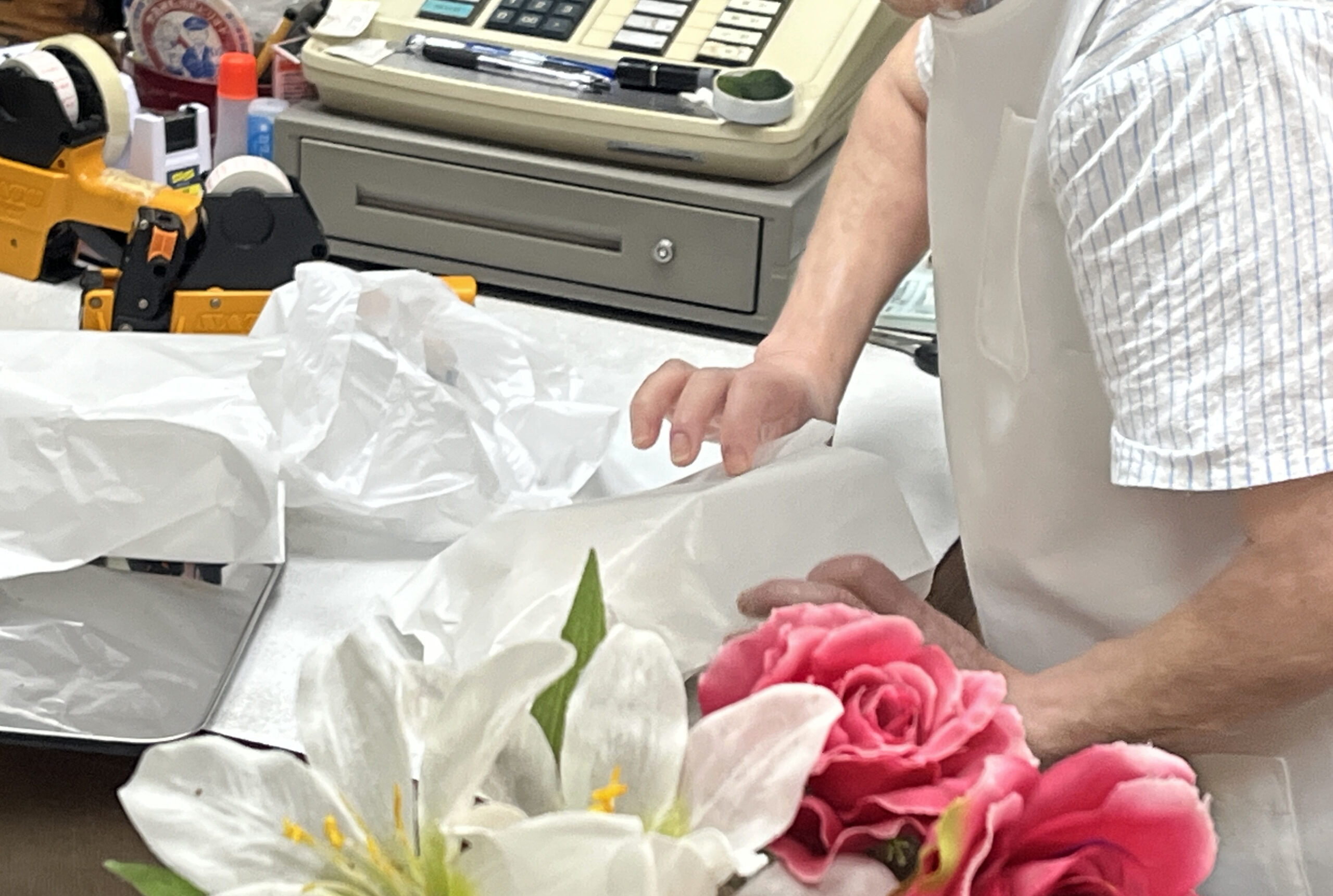
Walk through any major train station in Japan and you will see them. Travelers with huge backpacks, staring at their phones, debating whether they need cash and where to get it. More and more, novice visitors are opting to forgo cash altogether. They limit their itinerary to places that accept cards or QR codes. They are, often without knowing it, harming local businesses in the process.
But how would they know? A preference for digital payments is pervasive. Domestic and international players, including Stripe, Square, Visa, and Alipay, as well as local competitors like PayPay, are happy to invite you to go cashless in Japan. The message is everywhere. Convenience. Speed. Points.
So why do so many independent and family owned businesses choose to accept only cash? The preference is deeper than you think. Asking to pay with a card has an incremental and damaging effect on the health of local businesses. It is not rudeness. It is survival.
The Fee That Eats
PayPay is the dominant QR code based digital payment platform in Japan. It is backed by Masayoshi Son’s SoftBank Group, SoftBank Vision Fund 2, and LY Corporation. It currently offers the lowest merchant transaction fee among major players: 1.98%. That sounds small.
But here is what history teaches us. With other venture capital backed platforms, once they become the dominant player, fees increase. We can expect PayPay’s fees to rise, possibly to the average rate of around 3% charged by Stripe, Square, and GMO Payment Gateway.
Three percent. That is the margin many small businesses survive on.
A local vegetable seller, a tofu shop, a traditional sweets maker, a fishmonger. Many of these businesses operate on margins of 3% or less. For them, accepting digital payment is not a cost of doing business. It is a net negative. They lose money on every transaction. They are paying for the privilege of serving you.
A Reluctance to Raise Prices
There is a deep hesitancy to raise prices among small businesses in Japan. Many have endured the boom and bust cycles of the Japanese economy. For them, the price is a promise. A contract with their customers.
Decades of deflation have made consumers price sensitive. While foreign visitors arrive with the surplus wealth of stronger currencies, Japanese salaries have remained largely unchanged since the early 1990s. The underlying cost of goods traded in dollars on the international market eats into the margins of businesses of all sizes. Small businesses absorb the loss. They do not pass it on.
The result is a slow, quiet suffocation. According to a February 2026 survey by Teikoku Databank, Japan’s average “price pass-through rate” was only 42.1%. For every ¥100 increase in costs, businesses could only recover ¥42.10 through price increases. The remaining ¥60 had to be absorbed by the business itself.
Consider the The Taxi Driver
Consider the kojin taxi driver. These are independent drivers who hold a special licence from the prefecture to operate their own car as a taxi. They earn that licence after years of service with a company taxi and a legal examination. You can identify them by the round medallion on their roof. 個人タクシー.
In a recent report by the Asahi Shimbun, some independent taxi drivers in Fukuoka are choosing to avoid ride-hailing apps. They say both drivers and passengers feel manipulated by the convenience that the apps promise. One driver, Kawauchi Shinsuke, works about ten hours a day. He says if he makes ¥30,000 in sales, “that is good enough.”
He does not use ride-hailing apps. He waits at station rotaries and cruises nightlife districts. He manages his own payments as a one-person business operation. When you choose to pay with a credit card, you are subtracting roughly 3% of his total fare. Not from a faceless corporation. From him.
And consider this. Japan does not have a tipping culture. You enjoy the courtesy of that absence. By showing a preference for credit cards, you are effectively picking that driver’s pocket. On top of your personal privilege.
The Bigger Picture
Macroeconomic forces are crushing small businesses. Costs are skyrocketing. The weak yen, rising energy, raw material, logistics, and labor costs have all surged. The Corporate Goods Price Index has risen far faster than the Consumer Price Index, meaning businesses could not pass on the cost increases to consumers. They absorbed them.
This is not a matter of bad management. This is a structural squeeze. And digital payment fees are a tax on that squeeze.
How to Get Cash
Carrying cash has a number of benefits. You are paying to keep small businesses alive, rather than watching them be eaten up, gentrified, and erased. Look at what has happened to Shinsekai area in Naniwa-ku. That is the alternative.
You can withdraw cash from any ATM with your debit card linked to a Visa or Mastercard checking account in your home country. Do this. And be proud to pay in cash, knowing that you are being courteous to the business owner. You are not being backward. You are showing consideration and reciprocity for the kindness shown to you while in Japan.
Appendix
Teikoku Databank Survey 2026: https://www.tdb.co.jp/report/economic/20260319-pricepass-on202602/
Asahi Shinbun, March 22, 2026 “Are we being manipulated by ride-hailing apps? The sighs of independent taxi drivers who stick to cruising for fares.” https://www.asahi.com/articles/ASV3F21TSV3FTIPE00QM.html