Inside a century‑old former residence in Arima Onsen, kissaten Chikutaku serves medicinal keema curry under the glow of vintage pinball machines.
By Kometani, Kuma
Arima Onsen, Hyogo Prefecture. Jimejime na, an old man said to his wife on the morning Hankyu train to Takarazuka Terminal, dabbing sweat from his brow with a komon handkerchief. Humid and heavy, the kind of morning that makes you want to sit still and not move.
Today the author is traveling a well worn route, over the mountains on the Arima Kaido to the nestled hot spring town of the same name. The bus from Takarazuka Station departs at a normal pitch but climbs quickly into the mountains, switchbacks stacking one after another as the driver murmurs into his microphone in slushy, lethargic, indecipherable banshuben. The bus groans, but the mountain doesn’t care.
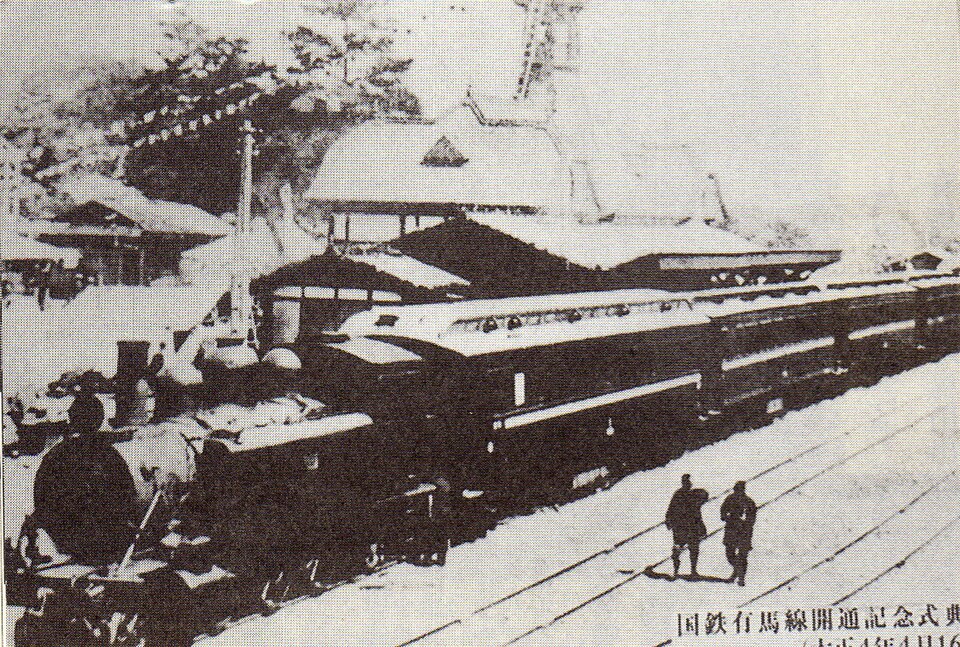
This road was meant for an electric railway that never came; before that, it was the Arima Kaido, a multiday journey for emperors and samurai who came to heal their bodies.
The Train That Never Was
For centuries the Arima Kaido connected Osaka and Kobe to Arima Onsen, a path traveled by emperors, aristocrats, and Toyotomi Hideyoshi himself. Post towns like Kohama-juku flourished as resting stops, known even for their sake brewing.
But the most interesting part of this road’s history is the one that never happened, because the bus you ride exists only because a railway does not. In the early 20th century, the Minoh Arima Electric Railway sought to extend their existing network from Takarazuka over the mountain to Arima Onsen, the plan being to cross the mountain along the Arima Kaido corridor and descend into the valley. Engineers decided the steep, rugged terrain was too difficult, so the dream later died in 1913.
They built a bus route instead. The Takarazuka Arima Jidōsha service was commemorated to cover the last mile over the mountain, and today, as your bus climbs Akasaka Pass, you are following ancient footsteps on a road that was almost a railway.
The Basin
Arima Onsen spreads out from the mountain stream that anchors the main bus terminal, the road winding in three directions and tucking inns, souvenir shops, and restaurants into the folds of the valley. At the basin a concrete drainage channel creates a cool recessed space with benches and shade, where locals and tourists dip their feet in the cold mountain water.
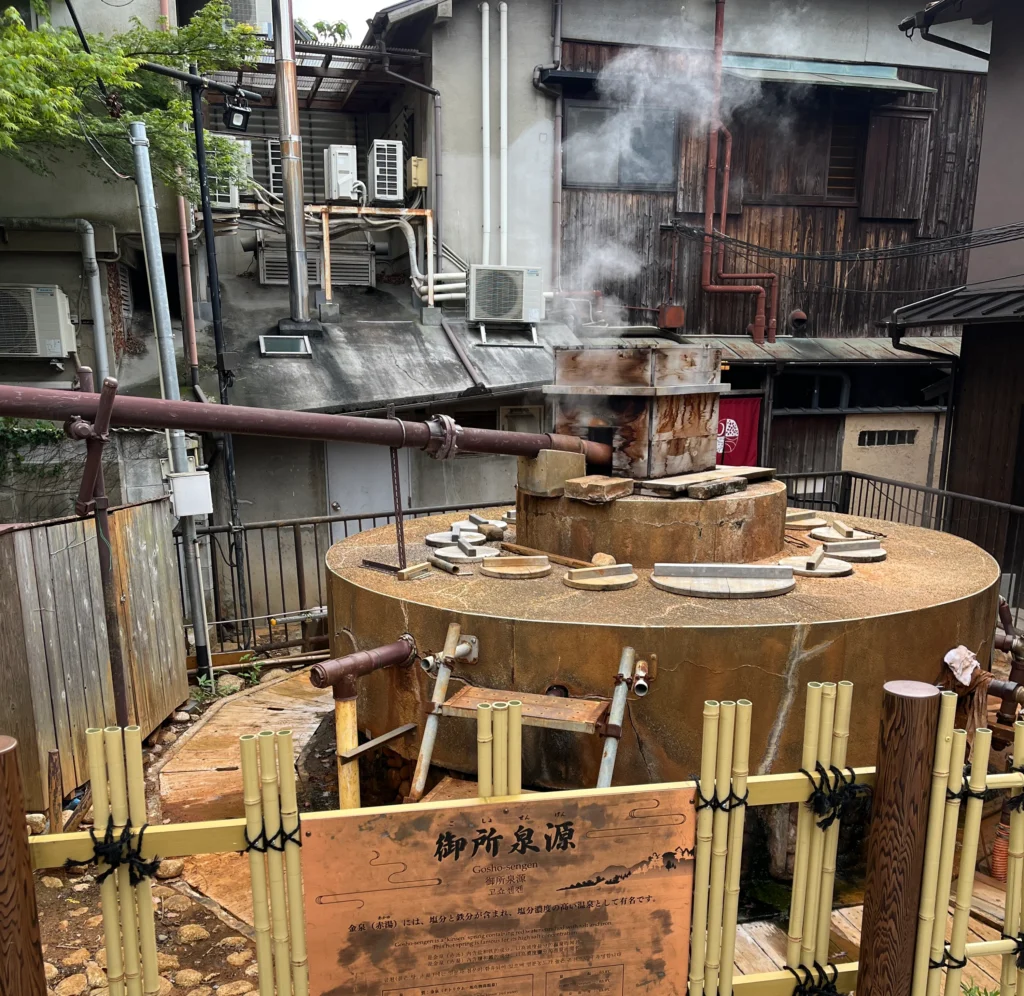
You walk past inns, omiyageya, and restaurants, heading toward the source. The water here is famous: Kin no Yu, the golden spring, is rich in iron and salt, leaving a russet stain on white towels and said to heal everything from fatigue to chronic pain. Hideyoshi himself came here to soak, holding tea parties on the riverbank while his retainers sweated in the steam.
It is strange to think that what was once reserved for emperors is now open to anyone: a salaryman, a student, a gourmand with too much free time. We soak in the same water, and the logistics of our modern world unfold in my imagination as a quiet miracle. I think about this while sitting in the crimson water, crowded with other visitors (it is the fastest onsen day trip from Osaka and Kobe), and my leg loosens as the pain fades.
Feeling better, I stroll further up in search of a late lunch or snack, though it is nearly 3pm and many of the best lunch restaurants close at this hour to prepare for dinner. Then I see a small signboard, hand painted, the kind that folds out from a hinge on the top, with an arrow and one word: “Omurice.”
Well, I think, that’s a clue. I pause long enough to feel my hunger, then follow the arrow.
The Clock and the Pinball
Turning the corner past a gift shop, I enter. “Mou mata aiteiru no?” I ask, gingerly. The woman at the counter has beautiful hands and a straight posture, and she leads me to the dining area, partitioned by a bookshelf. The restaurant is fairly empty, so I take a table in a sunroom open to the cooling breeze and sloping village streets.
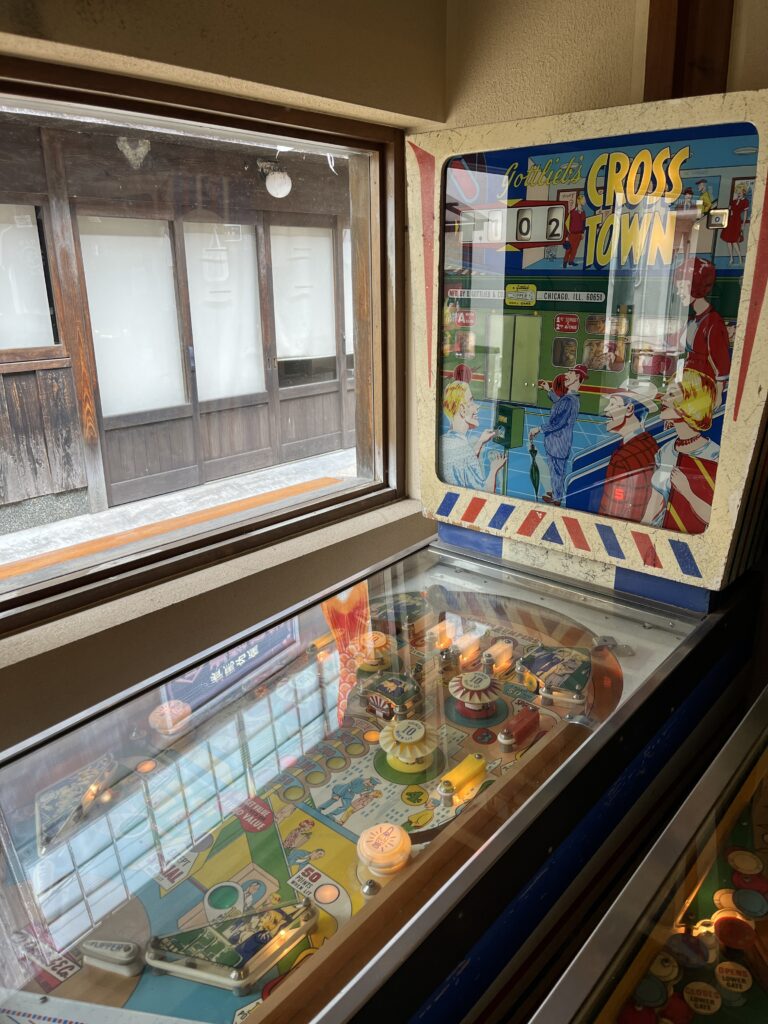
I look around the room, then at the menu, and there in the corner, unmistakably, are three vintage pinball machines. The interior has the atmosphere of an old storehouse; in the hundred year old building, the wooden beams glow in the late afternoon sun. TchicTac (Tick Tock) is filled with hardwood furniture, clocks, and electromechanical ephemera, the whole place steeped in Taisho Roman, that brief era of romantic nostalgia.
The most prominent pinball machine is called “Cross Town,” from 1966, of which only 2,765 units were produced. It still works. One hundred yen for a game. Two other machines of similar vintage sit beside it, quiet and waiting.
I reconsider the omurice. It is the obvious choice, the menu describing fluffy natural eggs with a demi‑glace sauce simmered for an entire day, wrapped around ketchup rice. It sounds good, but it also sounds heavy. So I order the keema curry instead, listed as “Arima Medicinal Keema Curry” with a small asterisk noting the use of local sansho pepper. They call it medicinal; I call it lunch. I add a whisky soda, because a cold drink on a hot afternoon is never wrong.
As the glass beads with condensation, I watch the street scene outside. Between the sunroom and the engawa, a rope trellis holds young passion fruit vines just beginning to climb. Then the food arrives.
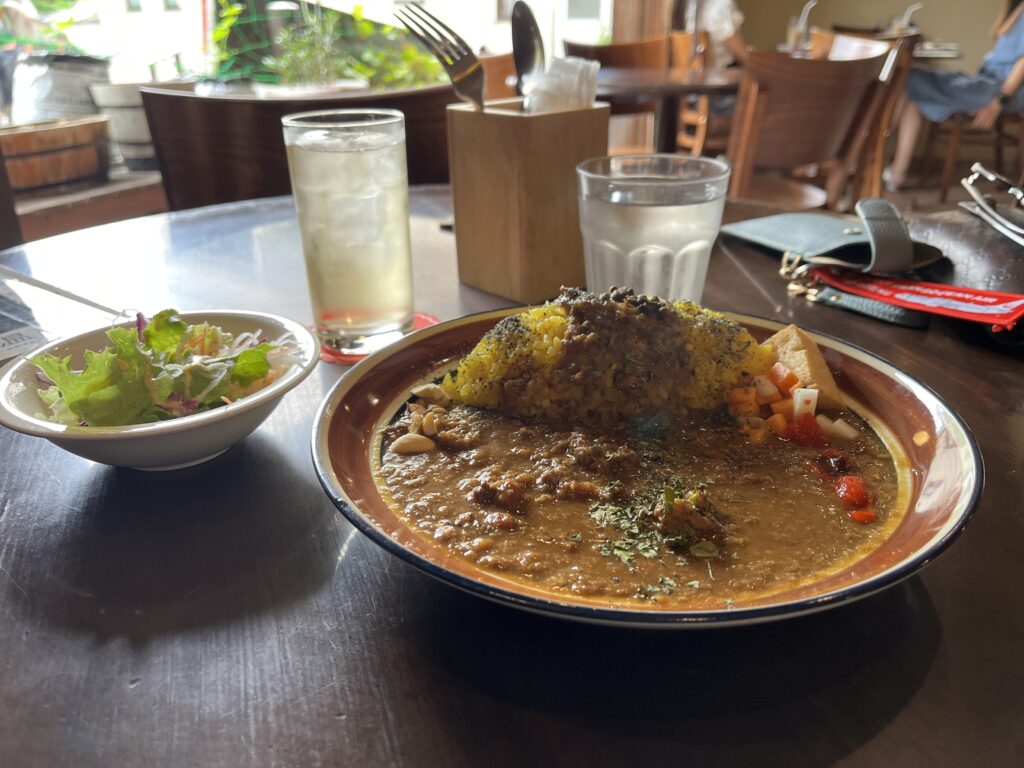
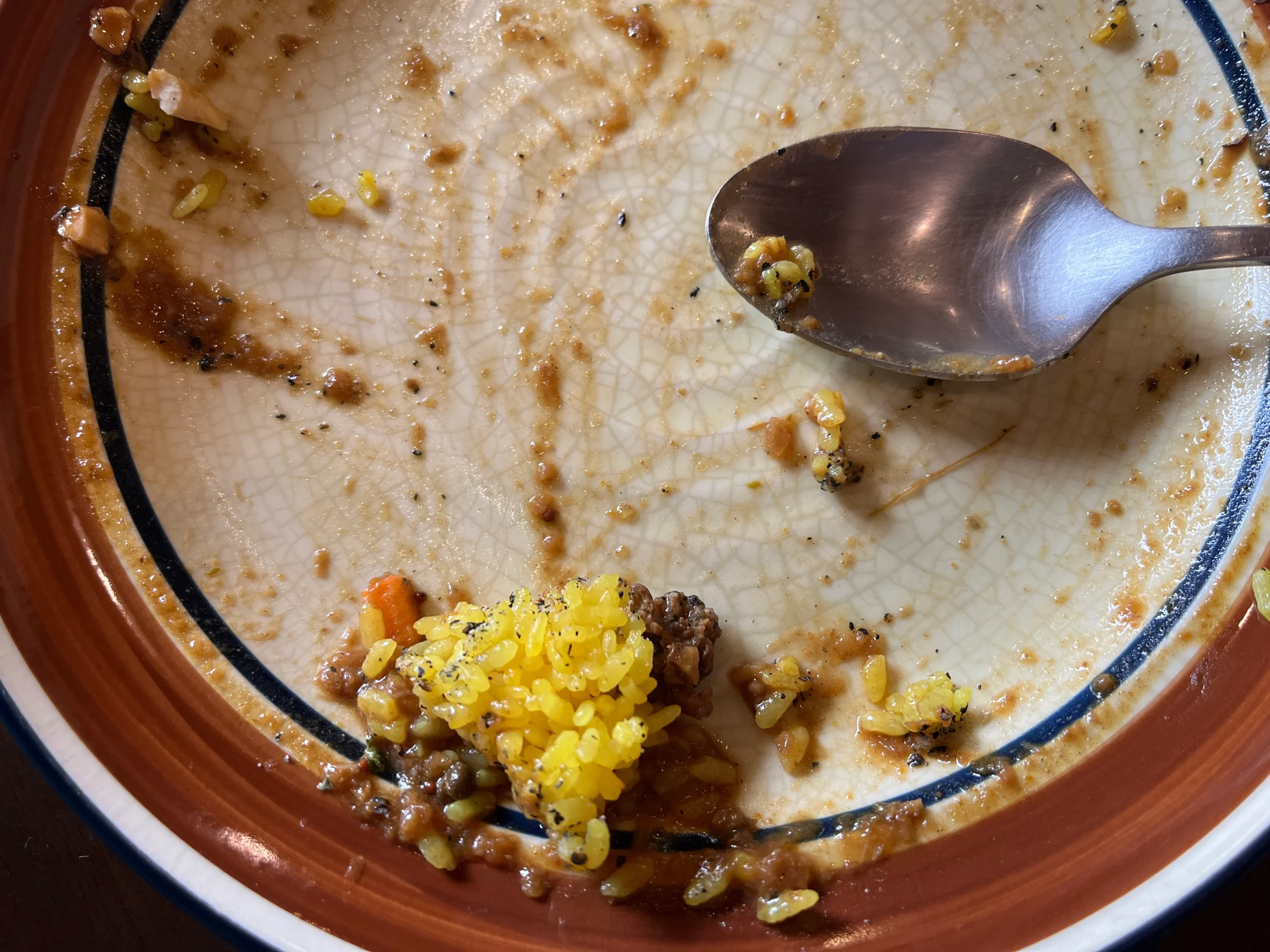
The plate is a beautiful crackled ceramic Kannyu plate, its glaze fractured like old ice. The curry occupies the center, a modest but confident mound of finely minced meat and vegetables, dark amber with hints of crimson from tomato and perhaps a touch of paprika. It is not a wet curry; the consistency is that of a loose paste, clinging to itself without pooling.
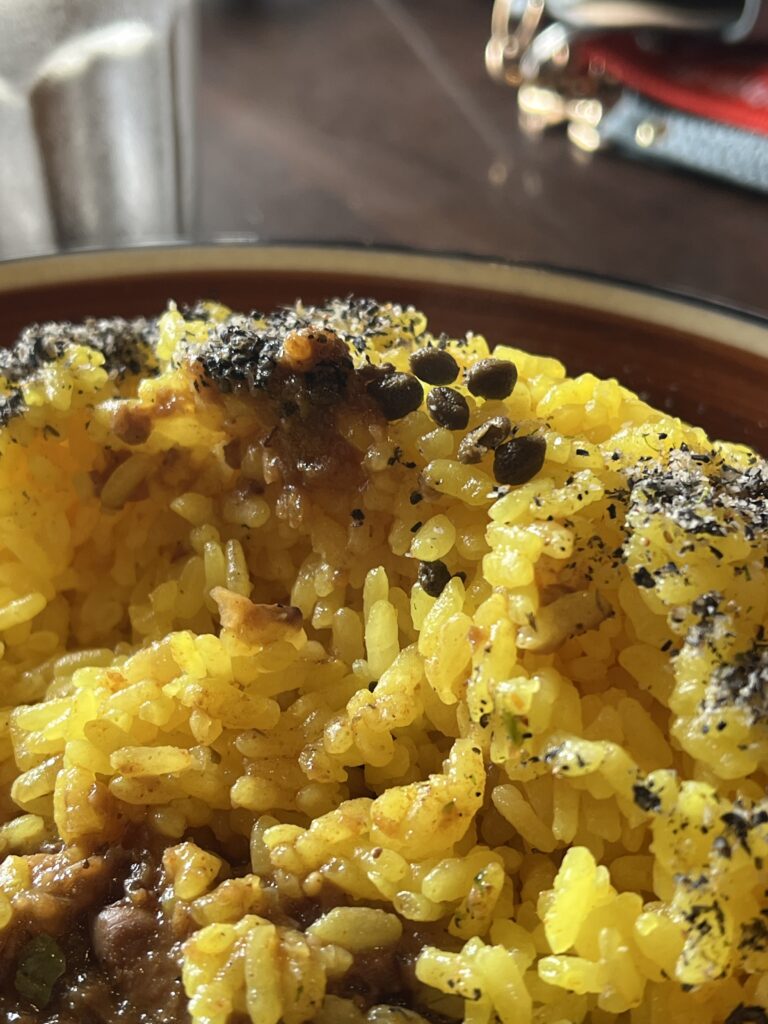
The nose is greeted first by the warm, earthy fragrance of cumin and coriander, then by a sharper, almost citrusy note that can only be Arima sansho. Unlike Sichuan peppercorn, which numbs, sansho delivers a clean, fleeting tingle, like a tiny electrical spark followed by the scent of young leaves. There is also a low, smoky bass note that seems to come from nowhere in the visible ingredients.
A single cube of atsuage is plated tastefully to the side of the curry, not buried inside. I save it for last. When I finally break through its soft, spongy crust, the inside reveals the source of that smoke: the atsuage has been lightly smoked over wood, giving it a campfire depth that balances the bright, sharp spices of the curry. It makes for an interesting last bite.
Alongside the curry sits a small, fresh salad of tsuma (thinly shredded daikon) and mixed greens, dressed only with a whisper of rice vinegar. Its purpose is textural and thermal: cool, crisp, neutral. On the edge of the plate, fast‑pickled carrots and red bell pepper add a note of crunch and tang to every bite they touch. They are sweet‑sour, with a decisive crunch, and they reset the palate between bites of the heavier curry.
The effect of the Arima sansho builds slowly. After three or four bites, a gentle vibration spreads across the tongue and lips, not painful, just insistent. It heightens every other flavor: the sweetness of the carrots, the smoke of the atsuage, the harmony of flavors in the curry base. The menu calls it “medicinal,” and I understand why. The pepper is said to aid digestion and warm the body from within. In the humid, heavy air of the onsen town, it feels precisely right.
The whisky soda is simply whisky and soda water over ice. Its bubbles and clean finish serve as a palate cleanser between different bites, allowing me to enjoy the plate slowly. The restaurant also serves coffee, beer, and local Arima cider, including the carbonated spring water known as “Teppo Mizu.”
I eat slowly, deliberately, taking small portions of seasoned long grain rice and alternating with the pickles and salad. Passersby notice the plate and the aroma of rice and spice, glancing longingly into the restaurant. The kitchen staff exchange looks.
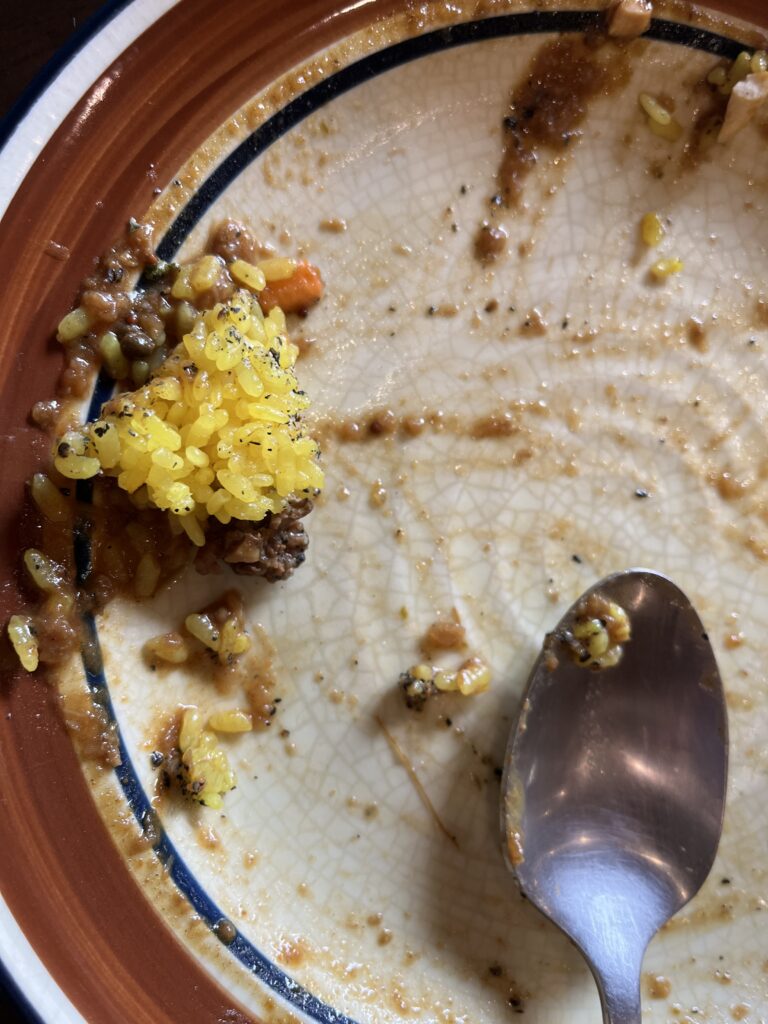
By the time I finish the curry, the highball is gone, and the afternoon light has shifted from gold to amber. My leg, still sore from the morning, feels almost forgotten. The sansho warmth lingers on my lips like a promise.
Last Ball
I finish the highball and the curry, then pay at the counter. As I do, I compliment the passion fruit vines on the trellis. “They are goya,” the woman says, “an Okinawan vegetable. Bitter, but delicious when cooked with a little oil.”
With that, I thank them and start to leave. Just then a group of six people push through the door and ask if they are still open. Outside, the mountain stream continues to run, the wooden buildings glow gold in the late afternoon light, and somewhere up the hill, a train that never was still waits for no one.
Chikutaku (茶房 チックタク)
https://tchictac.jp/
820 Arima cho, Kita ku, Kobe shi, Hyogo 651 1401
Open daily 11:00 to 16:00. Last order 15:00. Closed Tuesdays.
Cards and cash accepted.
Seven minute walk from Arima Onsen Station.
Google Maps: https://maps.app.goo.gl/vrRheKqr8sLN1KCw8
Tableog: https://tabelog.com/hyogo/A2801/A280112/28022862/